 Promotional banner for Salesforce and marketing focused on customer trust, emails, privacy, and digital transformation
- September 3, 2022
Will your Salesforce + Marketing Technology (Marketing Cloud, Pardot, Eloqua, Marketo, etc) go the distance in the Covid-19 and beyond? How will it stay respectful of your prospect’s time, attention, and preferences, as well as comply with Privacy laws?
Businesses built on entry barriers, global inefficiencies and entrenched positions, need a shot of digital marketing & transformation in the post-COVID-19 era. Are you ready to do that - while staying compliant?
$4 Billion worth of Dutch flowers
Let’s start with a little tidbit on the Tulips of Holland. Nearly half of the flowers in the global commercial trade are grown in the Netherlands.

In the last two months, Dutch floriculturists have destroyed more than 400 million flowers as demand plummeted, including some 140 million tulips.
This is the reality of a lot of businesses (and individuals) today.
Our flowers are not selling and businesses are wilting away.
Wait! Why is this relevant? The flower industry is built on the fundamentals of physical infrastructure and weather.
Notice that both of these do not need extensive digital transformation. The flower business was fine and could rest on its laurels…Until COVID-19 came along.
How do we survive and thrive in this new world - and as Salesforce/Marketing professionals, how can our businesses keep humming along?
As times are changing, there appear to be some new trends that will impact businesses of all kinds – regardless of their size, region, and nature. Here are some of the emerging trends and how they play in Digital marketing.
- New World, New Trends for Digital Marketing
- More Digital, Less Physical, or In-Person Interaction
- 100% Trust-based relationships
Transparent Marketing Policies - Permission(Consent) based Marketing with granular Permissions
- Frictionless Communication Preference Management
Great…What does that mean for my Marketing?
Customer-centric companies understand the need to manage more granular Communication Preferences and Consents. With the Data Privacy laws such as GDPR and CCPA, this has become even more pronounced. Here are some considerations to think about.
A.) Is your email template building trust with your subscribers?
Here is an example of a slightly redesigned email template with easy access to three key links that build Trust by being respectful of our subscribers, and keep us compliant.
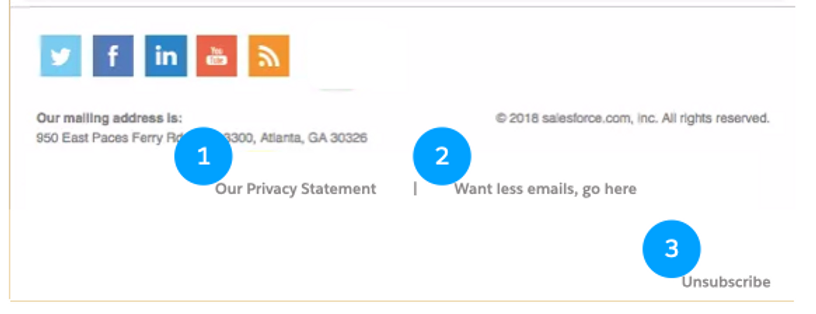 Email footer with contact details, privacy statement link
Privacy Statement link is embedded in every email so that our subscribers can easily check it out before unsubscribing.
Communication Preference link that gives your subscribers the ability to manage their granular consents, set their opt-ins and opt-outs, etc. This is not an “Unsubscribe” link. More on this part 2.
Unsubscribe aka the good old “Hit the Road Jack” default link that some tools won’t let you remove. If you can change it to #2 above, please do so.
B.) Is your Privacy Statement as usable as the rest of your website?
In a world where we are trying everything to build trust, every little thing matters. I have lost business because someone navigated to our website and receive an invalid certificate message (a DNS propagation had not finished).
There are two key attributes of a Privacy Statement:
Easy to understand – Do you have a privacy statement that is simple to read and understand? The simplest and most human thing a brand can do that resonates with its customers is to be transparent. If you need to, hire a copywriter that can work with your legal. Here is BBC’s human-readable privacy promise that we all can aspire to.
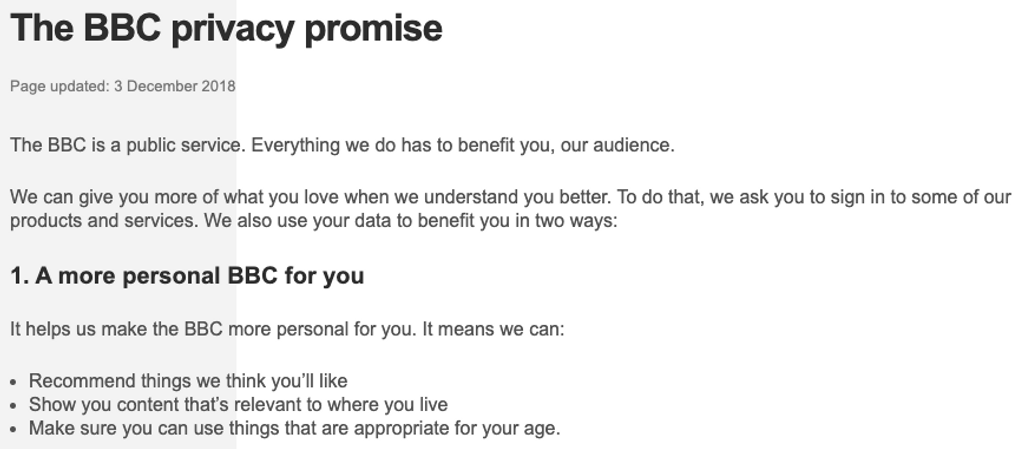 The BBC Privacy Promise Information Snippet
- Multi-lingual + Multi-regional – Do you have a well-crafted policy that is available in various regional languages? As we all flock to digital, outlining Privacy statements in common multi-lingual (and often multi-regional) is a must for your global customer.
There are sites that are entirely multi-lingual, except for their Privacy Statement. Do.Not.Be.That.Company.
Here is an excellent example from Walt Disney
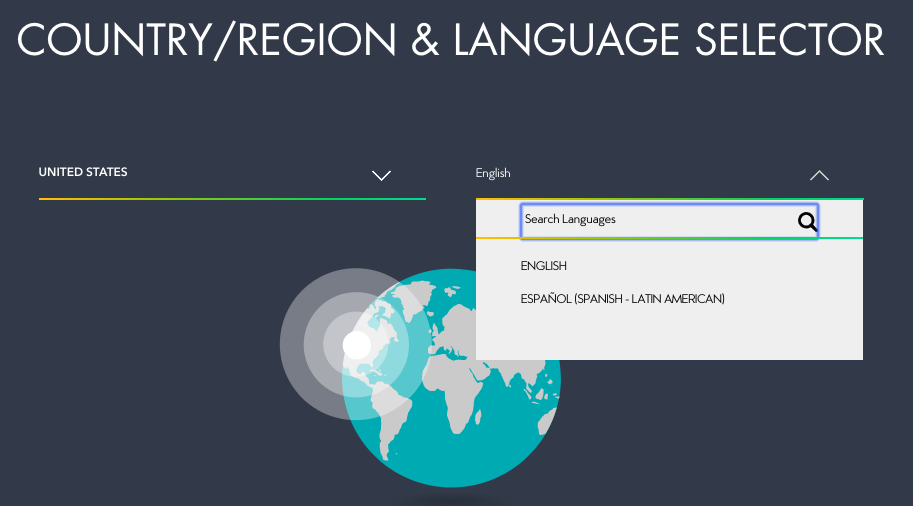 country/region and language selection menu
C.) Is it easy for customers to exercise ‘Data Privacy Rights’?
Finally, the third part of building trust is where the rubber truly meets the road – How does your organization address data privacy requests.
Making it easy for individuals to request their rights, and delivering on them is a profound act of building trust.
Here are some examples (not an all-inclusive list) of the common Data Privacy Requests that come up for GDPR and CCPA. This is not legal advice.
Right to be forgotten (Data Erasure/Data Deletion)
Right to Data Portability
Right of Rectification
A number of businesses today just provide an email address on their website for anyone to contact about their data privacy right. It basically tells them that your data privacy rights were important enough for us to have an email address.
If we don't provide an email address to customers for buying our product, why is providing an email address for data privacy rights okay?
Typically, most businesses go through three stages of data privacy request handling. You certainly want to get to Stage 2. A limited amount of automation and self-service can dramatically improve the overall experience and further trust in your brand.
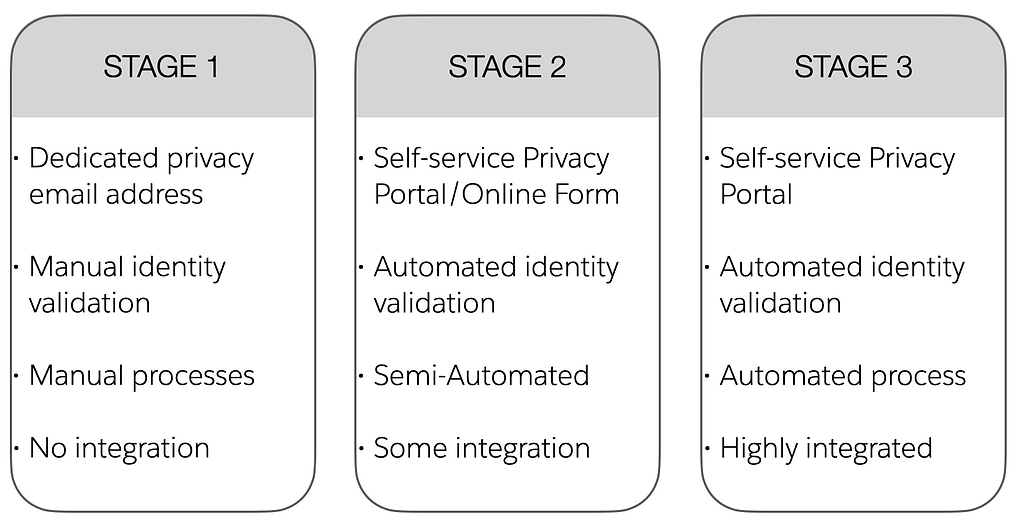 Three stages of privacy operations maturity diagram.
Great! How do I do it?
A cohesive marketing and data privacy effort that builds trust can offer a respite in the current times.
Discuss your specific GDPR/CCPA use cases with the author of this article.
This article outlines the “What” of building trust. Learn more about the “How”. Set up a brief meeting to discuss your specific strategy.
Curious to know more? Check out our AppExchange listing
Related Articles
Related Articles

Saurabh Gupta
Saurabh is an Enterprise Architect and seasoned entrepreneur spearheading a Salesforce security and AI startup with inventive contributions recognized by a patent.
Related Articles
Data Masking vs Data Seeding for Salesforce Sandboxes
Data masking vs data seeding for Salesforce sandboxes: Learn how each approach protects sensitive data, their key differences, and which fits your needs.
RTBF & Data Portability Dilemma in Salesforce? 5 tips for you
Learn how to automate RTBF and data portability requests in Salesforce to enhance GDPR compliance and reduce manual effort.
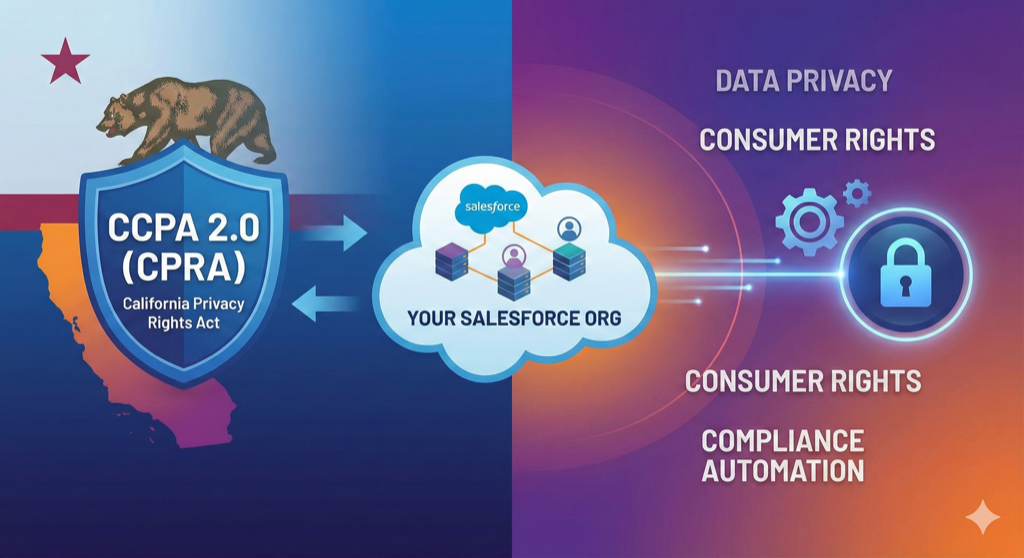
CCPA 2.0 (CPRA) and Your Salesforce Org
Discover how to navigate CPRA updates for Salesforce orgs, ensuring compliance, customer trust, and efficient data management.